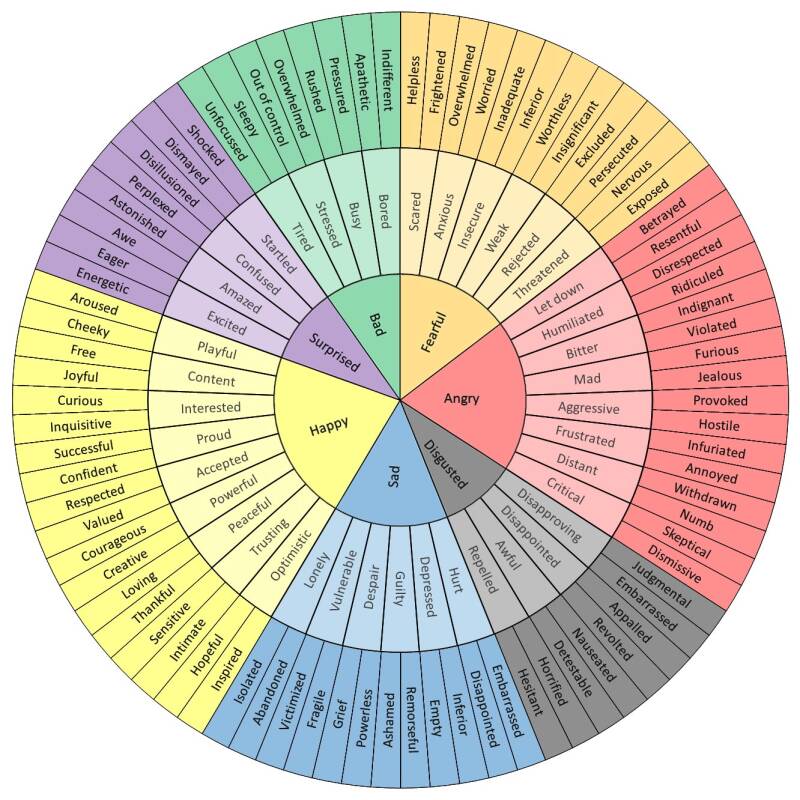
What colour are you today?
CBT involves creating a visual representation of therapy problems as a system of cycles and shows the main issues, maintaining cycles, targets, and goals, and of treatment, called a blueprint
The blueprint supports goal setting by identifying barriers to recovery and provides a structure for targeting treatment. As it's also a live piece of work, it's always in flux and being adapted and updated to suit the client's needs.
As a strongly visual, neurodivergent clinician, I get excited when I see clients' blueprints come together, as this is often our first exploration of themes, emotions, thoughts, and sensations. Often, it brings up neurodivergent specific adaptations and the use of colour. As my clients describe their inner world and relationship with emotions, I always require colour in the blueprint to ground my understanding and support the development of the treatment plan.
Colours can be strongly symbolic and bring structure to our understanding of internal systems and our relationship with thoughts and mood: for example, the self-critical inner voice with its demanding thoughts (the colour of sludgy brown for me, I’m afraid) or the worrier (deeply blue and swirling?). These are examples of colour bringing an abstract concept to full life, allowing connection to and processing of our deepest fears to something tangible and often useful
The whirling of a deep blue anxiety pool was a drawing that one of my clients created in treatment and helped her describe and manage her thinking problem of catastrophising. If she threw negative thoughts into the whirlpool, she knew it would whip them up into a huge drama or storm. Noticing the whirlpool beginning to whirl became her warning sign of anxious thoughts spiralling and gave her the opportunity to pause before reacting
When experiencing critical or shaming thoughts, have you ever associated them with a colour or sound? When looking at your goals and thinking about the future, are there any familiar thoughts or voices? What visceral or visual feelings do you experience?
Green often comes to mind as a colour associated with safety. I am always drawn to my local meditation centre, with its deep green walls, as my personal safe space. . This is where the therapeutic benefits of connecting senses, emotions and art can really come into play. We engage our body and mind with cues of safety and containment from certain colours and visuals, which then signal helpful emotions and thoughts.
And on the scientific front (This one’s for the nerds, including me), noticing and identifying emotions has been shown to be extremely helpful in regulating them. After all, this is evidence-based CBT!
For example, using coloured cue cards can help slow down our responses and develop better self-control in the moment. Think of the traffic light system. Green is settled and calm. Amber is a warning that hot feelings will follow. Red indicates emotions becoming overwhelming
An exercise in noticing emotions :
Noticing emotions can be difficult for some of us, and this is where colour can help.,
(Quick note: If you are a colour person, this exercise will speak to you; if you are not, please don't worry. It works just as well to find a word, a sound, or a sensation in your body. Just allow yourself to pause and notice how you feel.
First, find somewhere safe to sit. Become aware of your breathing and allow yourself to settle into a rhythm, allowing your body to relax,
As your breathing settles, notice how you feel and where you feel it. If you can, just notice what comes up for you without judgment or reaction.
If you notice an emotion or thought, does it have a colour? See if you can name it; if you want to and are willing, try drawing it. Do what feels right for you and take a pause to feel what you feel.
The step described is highly important. If you have identified an emotion or thought process, or both, then congratulations, this is the first step in regulating emotions!
Take a pause …. That’s the first step completed
If you are feeling safe and settled, you can even go full steam ahead with that visual element and notice the whole host of thoughts. What colour would they be if you could visualise them? What would that huge, sad feeling look like? What's the thought, and what's the emotion? Maybe they have distinct colours?
Maybe they look like gremlins? Remember to be kind and caring; don’t go full hog. If emotions are too intense, go back to a less intense image.
You can practice these exercises whenever you wish as a helpful tool to develop your emotional literacy and confidence.
Summary :
This exploration of colour and visualisation can help us take the first step in CBT without necessarily writing or using words and process the world in a more neurodivergent-friendly way. CBT distinguishes feelings as thoughts and emotions. Experiencing and observing emotions and thoughts in symbolic colour and visualising concepts allows us to respond and develop intuitive awareness that links with that constant CBT therapy question, “How am I feeling, what am I thinking, and what is the emotion?
Colour wheel of emotions (NB: colours are by design and not individualised)